

How RAK Hospital saved an Indian worker from rare brain abscess
Surgery was performed just in time to avoid permanent neurological damage

DUBAI: Doctors at RAK Hospital in Ras Al Khaimah saved the life of a 32-year-old Indian labourer suffering from a rare and rapidly worsening brain infection known as a brain abscess.
The patient, Ananta Sahu, had endured severe headaches, fever, and neck pain for over a week before he was brought to the emergency department.
Medical experts at the hospital acted swiftly, recognising early warning signs that pointed to a serious neurological issue. A scan revealed a swelling in the cerebellum – the part of the brain responsible for balance and coordination. Within hours, further imaging confirmed it to be a pus-filled brain abscess surrounded by dangerous swelling, requiring urgent neurosurgical intervention.
What made it critical?
The case was particularly urgent due to the speed at which the infection progressed. Despite being started on treatment immediately, Sahu’s condition worsened quickly, prompting a second MRI scan using contrast dye. It confirmed the presence of an encapsulated abscess – a dangerous formation that, if untreated, could lead to meningitis, hydrocephalus (fluid accumulation in the brain), stroke, or death.
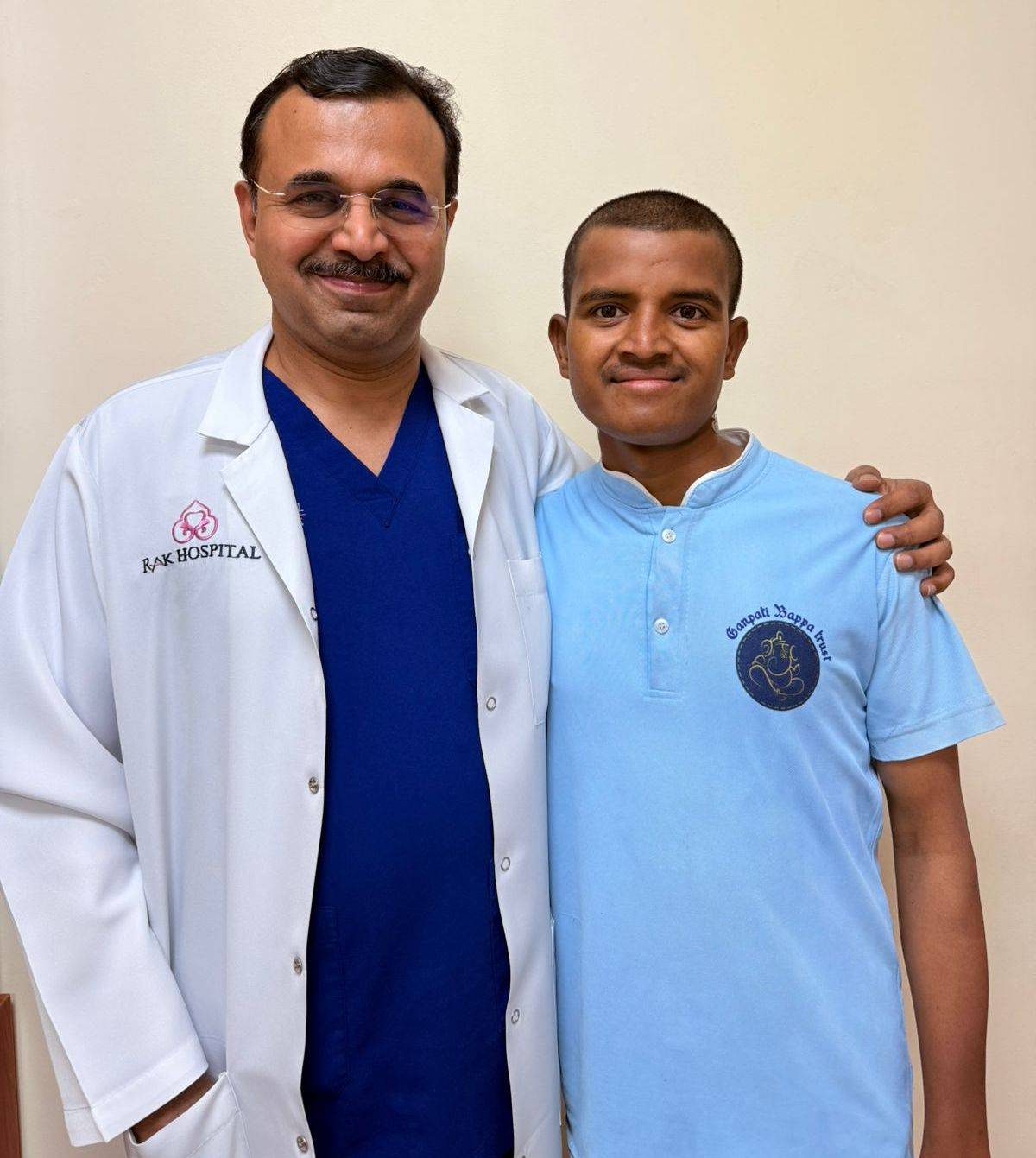
“Brain abscesses can rupture and spread infection through the brain or bloodstream,” said Dr Tinku Jose Kurisinkal, Consultant Neurosurgeon at RAK Hospital. “The real challenge is that the initial symptoms can mimic conditions like cervical spondylosis or viral infections. But the combination of headache, neck stiffness and fever should raise suspicion.”
He added that without the team’s high clinical alertness and rapid decision-making, the outcome could have been tragic.
How was it treated?
Sahu underwent a complex emergency neurosurgical procedure known as a suboccipital craniectomy. This involves temporarily removing a section of skull at the back of the head to access and drain the abscess in the cerebellum. The operation was conducted within hours of diagnosis and successfully stabilised the infection.
The medical team monitored the patient closely in the intensive care unit following surgery. His condition improved steadily, and within days, he was able to walk unaided and reported complete relief from his previous symptoms. He has since returned to work and resumed normal activities without any lingering neurological effects.
What are the risks?
Brain abscesses are rare but can result from untreated infections elsewhere in the body – such as in the ear, sinuses, or teeth – which quietly spread to the brain. Individuals with compromised immune systems or those working in environments with poor hygiene are particularly at risk.
This case highlights the importance of timely medical intervention and proper diagnosis. As the symptoms can resemble more common, less dangerous conditions, a delayed diagnosis often leads to life-threatening complications. In Sahu’s case, the early MRI scan and subsequent contrast imaging were key to identifying the condition before it advanced beyond repair.
According to medical experts, individuals experiencing unexplained headaches, fever, and neck pain should seek immediate medical attention. The presence of these combined symptoms, especially with neurological signs, warrants further investigation without delay.